What Makes a Destination Distinctive?
There seems to be a tendency in tourism development to assume that creating more value means adding more items to the agenda: another attraction, another event, another activity, another reason for people to visit.
Sometimes it might be useful, particularly where a destination needs to broaden its appeal or create new sources of income. But there is another approach that interests me even more, especially for smaller destinations and place-led tourism businesses. It begins not with what can be added, but with what is already there. In other words: Less is more.
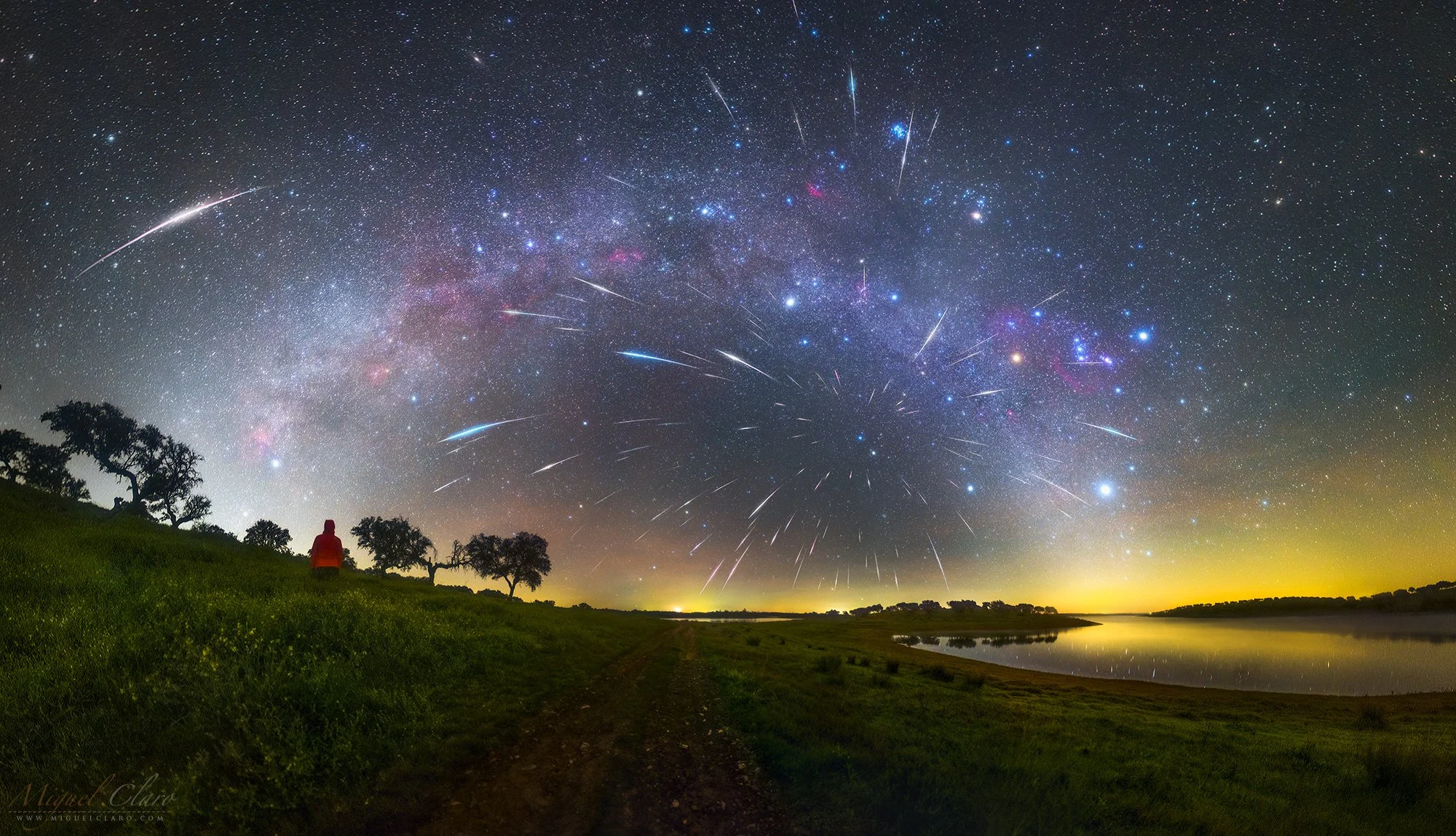
Dark Sky Alqueva in Portugal is a good example of this. Its main tourism asset is not its building, resort, theme park or piece of infrastructure. Rather, it is darkness or, more precisely, the exceptional quality of the night sky that makes it darkness makes more visible.
Sounds simple right? But what has been built around it is anything but accidental.
Dark Sky Alqueva was created in 2007 and became the first place in the world to receive certification as a Starlight Tourism Destination. Today its certified territory extends across more than 10,000 square kilometres around the Great Lake Alqueva, encompassing eleven Portuguese municipalities as well as areas across the border in Spain. It has also become the world's first transboundary Starlight destination.
For me, this story is not really about astronomy. It is what took place once a destination recognises something which has always been there and crafted this to become the foundation for a distinctive tourism proposition.
From darkness to destination
The asset at Alqueva is unusually clear: very low levels of light pollution, broad horizons, favourable atmospheric conditions and a rural landscape in which the night sky can still be experienced with remarkable clarity. In much of Europe, especially around urban areas, that view has become increasingly difficult to experience. At Alqueva, visitors can still see the Milky Way with the naked eye during much of the year.
Rather than just promoting the area as somewhere with good stargazing, a wider visitor economy has been organised around the idea. The destination offers guided astronomical observation, solar observation, astrophotography and night canoeing, while astronomy is combined with experiences involving food, wine, nature and the surrounding landscape. Accommodation providers and specialist tourism businesses form part of an official partner network, with some adapting practical elements of their service (including meal times and operating hours) around the needs of visitors taking part in mostly night-time activities. So the night sky may be the attraction, but the tourism product is actually a much larger network of experiences, businesses and people that enables a visitor to engage with it.
There has also been a deliberate effort to protect this newfound asset on which the industry proposition depends. The work of the Dark Sky Association connects astrotourism with reducing light pollution, responsible lighting, environmental awareness and sustainable development. In other words, preservation of the night sky is not an environmental initiative sitting outside tourism; it is a fundamental part of the tourism model itself.
This destination philosophy (I call it) has gained considerable international recognition. By the end of 2025, Dark Sky Alqueva reported receiving more than 60 international awards, including sixteen World Travel Awards. In October 2026 it added the Sustainable & Regenerative Tourism Award at the Tourism Innovation Awards in Seville, recognising this as a model that links protection of the natural night environment with tourism and opportunities for many businesses within the region.
Furthermore, the Portuguese tourism authorities have also supported further development of the destination because of this success. A project running from September 2024 to March 2026 involved eligible investment of €484,900 and specifically out the protected night sky as a strategic resource for the sustainable development of the territory. This project encompassed scientific tourism, nature tourism and related experiences around the Great Lake Alqueva, including night canoeing.
So what began with something as intangible as darkness has become a clearly positioned destination with international recognition, specialist experiences, local business participation and a strong economic reason to protect the very resource on which its distinctiveness depends.
Finding the value that already exists
There is a key lesson here for many “destinations”.
When people talk about tourism, they naturally tend to think about what can be seen, visited or photographed: beaches, buildings, monuments, wildlife, hotels and attractions. Yet some of the strongest qualities of a place are much harder to ascribe materially in these terms. It might simply be the absence of noise. A feeling of space. The quality of the landscape at a particular time of year. A fishing community that still works from the same harbour for generations. The relationship between local food and the land on which it is produced. A natural animal migration route passing through an otherwise little-known area. A particular quality of light. A long-established way of life for a relatively unknown culture. or even the fact that relatively few people go there.
These qualities can easily be missed or ignored by people living in a place because they are familiar. What has always been there can appear ordinary but for somebody arriving from somewhere very different, and seeking it, it may be extraordinary.
I think positioning a destination should begin well before discussions about websites, social media, advertising or campaigns. We should first identify what the distinction actually is. Terms such as beautiful, authentic, sustainable, unique and unforgettable appear across thousands of tourism websites. You cant miss them when you are bombarded by them. But they are rarely sufficient.
The harder and more useful question is: what is genuinely true about this place that another destination cannot (easily) claim? Dark Sky Alqueva can answer that unusually well. Its night sky is not some embellishment to the brand, rather it is the reason the destination exists at all in its current form. For other places this answer often requires more work and openess, because the strongest quality might not be an obvious attraction at all. Often, it may present as having little if any value locally-speaking.
Turning a place into an experience without losing the place
Once a distinctive quality has been identified, the next challenge is actually deciding what to do with it. This is where destination development can either strengthen a place or unfortunately undermine the thing that made it interesting in the first place.
A natural or cultural asset only becomes more valuable to visitors when they understand and experience it. Interpretation, guiding, photography, local knowledge, food, accommodation and carefully designed activities all deepen that relationship. Alqueva did this by connecting astronomy with science, landscape, accommodation, gastronomy and outdoor experiences rather than treating stargazing as a stand-alone attraction.
However, there is an important balance, as with all things, to retain. Typically the very virtue of a place becomes the challenge to keep. One may quickly find a situation where for example a quiet place begins to lose its quietness, a remote place starts becoming heavily developed, or a wildlife location can become disturbed by the tourism intended to celebrate its character. In Alqueva's case, the problem is that too much artificial light can damage the very night sky on which the destination proposition depends. Hence, the idea of stewardship is key and should be closely connected with destination positioning.
Protecting these qualities needs to be central to the visitor story. Explaining why darkness is protected, why visitor numbers are limited, why a particular route is restricted, why wildlife must be observed in a certain way or even why development has deliberately been kept small can actually help people understand the value of what they are experiencing - and feel it through this experience. The key part here is that the explanation given is specific and credible.
The opportunity for smaller destinations
I believe this approach is particularly relevant to smaller destinations, independent lodges, reserves, retreats and place-led businesses because they are rarely going to win by competing on scale. Their advantage through their size and scale may be something much more difficult for a larger competitor to reproduce: detailed knowledge of one landscape, a relationship with a particular local community, having direct access to an environment, carrying a particular history, providing a slower pace or simply the feeling of being somewhere that has retained its identity.
For these businesses, the strategic opportunity is not to create more attractions, it is to understand what they already possess and then build the visitor experience around it.
In fact that also changes how a website should work. If you browse online today for destinations, a surprising number of tourism websites lead with the same formula of inventory: rooms, facilities, packages, activities and rates. All of that information is essential, particularly once somebody is considering a booking, but it does not answer the question that comes before it: Why should I go there in the first place?
A proper destination or hospitality website should make that answer increasingly clear as somebody moves through it. The language, photography, experiences, local stories and practical information should all reinforce the same underlying idea rather than operating as separate pieces of content. And, this matters for search as well. Someone looking for dark sky tourism in Portugal, astrotourism in Europe or stargazing holidays in Portugal encounters a destination with a very clear relationship to those subjects. Alqueva is not trying to be relevant to everything. It has become an authoritative destination based on something very specific.
That principle also extends beyond astrotourism. Clear destination positioning makes it easier for people, and the systems they use to discover and research places, to understand what a destination is known for, where it is, what can be experienced there and why it is different.
Knowing what not to build
Finally, there is nothing wrong with building new tourism infrastructure. Alqueva itself has developed observatory facilities, experiences and a substantial network around its original resource. The key principle though that stands is that places should remain untouched. This follows with what evolves when a destination has become successful for that reason and then development follows. The tension then rises between development that reveals the character of a place and development that gradually replaces it. Dark Sky Alqueva works because the development follows the asset and works within the remit of preserving it. The astronomy experiences, local partnerships, accommodation and conservation activity all lead back to the same underlying proposition: this is a place where the natural night sky still matters.
In conclusion, every place will have a different answer. Finding it may be one of the most important pieces of destination strategy there is.