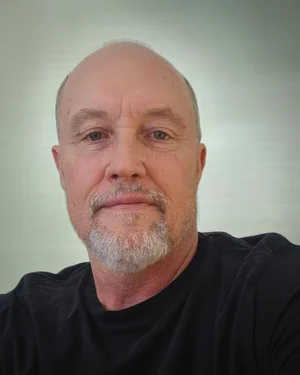
Kruger Speaks, by Helena Kriel and Don Pinnock, published by Struik Nature (2026). Featuring a selection of wildlife photographs by Adam Piotr Kossowski, alongside contributions from other photographers.
How a photograph of a leopard led to my involvement in a new book exploring the wildlife, people and conservation challenges of Kruger National Park.
In July 2025, I received a message from Helena Kriel about one of my wildlife photographs, Midday Growl, showing a leopard in a tree. She had come across it through the Kruger National Park – The Best of Kruger community and wondered whether I would consider contributing it to a book she was writing with environmental journalist Don Pinnock.
I was delighted to hear from her. Kruger National Park has long been a place of great interest to me, both as a photographer and someone who cares deeply about wildlife and conservation.
What started as an enquiry about a single photograph soon developed into something more. Helena visited my photography website, explored my collections and shared a selection of images with Don. By August, we were discussing the possibility of including several photographs in the publication.
That was how I became involved in Kruger Speaks: An Intimate View of a Magnificent Wildlife Park, published by Struik Nature in October 2026.
A book about much more than wildlife
There are many beautiful photographic books about Kruger National Park, and understandably so. Few places offer such extraordinary opportunities to experience Africa's wildlife in its natural environment.
But Kruger Speaks approaches the park from a broader perspective.
Through interviews, personal accounts and carefully researched stories, Helena and Don introduce readers to the people, animals and landscapes that make Kruger what it really is. Rangers, scientists, conservationists, workers and visitors all contribute to a much larger picture of a place that is both remarkable and increasingly complex.
The book explores the relationships between wildlife and the environment, the dedication of those responsible for protecting it, and some of the difficult realities of conservation.
There are stories about the animals and their behaviour, but also about poaching, the pressures facing the park and the people whose work and lives are closely connected to its future.
I think this is what makes the publication particularly worthwhile.
It is easy to visit Kruger and become absorbed in the excitement of a sighting, whether watching lions resting in the shade, a leopard carrying its prey into a tree or a rhino calf following its mother. Those encounters can be unforgettable, and they are certainly among the reasons I enjoy wildlife photography.
Yet every sighting is part of a much larger and more complicated natural world.
Kruger is not simply a collection of magnificent animals waiting to be photographed. It is an enormous living ecosystem, with extraordinary relationships between species, habitats and people. Understanding those connections makes the experience of the park all the more meaningful.
This is something Kruger Speaks tackles so well, which helps readers appreciate what they experience.
From camera to the printed page
Over the following months, Helena, Don and I exchanged photographs and discussed which images might be suitable for the book.
By January 2026, the publication was moving into its design stage. Don sent me a broader selection for consideration, and I prepared the original high-resolution photographs for the publisher, together with several additional options.
It was an interesting process because photographs that work well individually do not necessarily work in the same way within a book. Their relationship to the text, the available space and the overall design all ultimately influence the final selection.
The published book includes a number of my photographs alongside the work of other contributing wildlife photographers.
Among my images are a leopard with its prey high in a tree, a young rhino standing beside its mother, lions interacting, a buffalo in the warm light and a dwarf mongoose emerging from a termite mound.
Some occupy full pages, while others accompany the text. Seeing them brought together within the finished publication has been particularly rewarding.
Each photograph began as a moment I experienced in the bush. I had no particular expectation that any of them would eventually become part of a book, and it is rather satisfying to see them used to help tell a story far beyond the original encounter.
The people behind Kruger Speaks
Helena Kriel brings a strong personal commitment to wildlife conservation. Alongside her writing, she is the founder of Baby Rhino Rescue, an organisation supporting the protection and care of rhinos, including vulnerable and orphaned calves.
Don Pinnock is an experienced environmental and investigative journalist whose writing has explored wildlife, conservation and the complicated relationship between people and the natural world.
Their combined perspectives give the book considerable depth. The photography is an important part of the experience, but it is the accounts, observations and research that take readers beyond the familiar images of Kruger.
I am grateful to Helena for discovering my work and bringing me into the project, and to Don for involving me in the photographic selection. I also appreciate the work of the Struik Nature editorial and design team, who have brought the writing and photographs together so effectively.
Why I think this book matters
One of the things that concerns me about wildlife conservation is how easily we can become accustomed to hearing about the difficulties facing our natural world. We read about poaching, habitat loss and the growing pressures on protected areas. We may be saddened or concerned, but often these issues remain distant from our everyday lives. A book like Kruger Speaks helps bring those concerns into a more understandable context.
By introducing readers to the people working in the park and the extraordinary complexity of its natural environment, it reminds us that conservation involves far more than protecting individual animals. It requires knowledge, commitment, difficult decisions and the continued efforts of people who often work under challenging circumstances. For anyone who knows Kruger, the book offers an opportunity to appreciate a familiar place from different perspectives. For those who have never visited, it provides an introduction to the beauty of the park and the complicated realities behind its protection.
I hope it encourages readers to look beyond the excitement of individual wildlife encounters and take a greater interest in the future of these extraordinary places. I am pleased that a selection of my photographs has found a place in this publication. More importantly though, I hope Kruger Speaks reaches a wide audience and contributes to a deeper appreciation of one of Africa's most remarkable wildlife areas.
About the publication
Kruger Speaks: An Intimate View of a Magnificent Wildlife Park
Authors: Helena Kriel and Don Pinnock
Publisher: Struik Nature / Penguin Random House South Africa
Published: October 2026
The book includes photographs by several contributing wildlife photographers, including Adam Piotr Kossowski.