The Last Splash
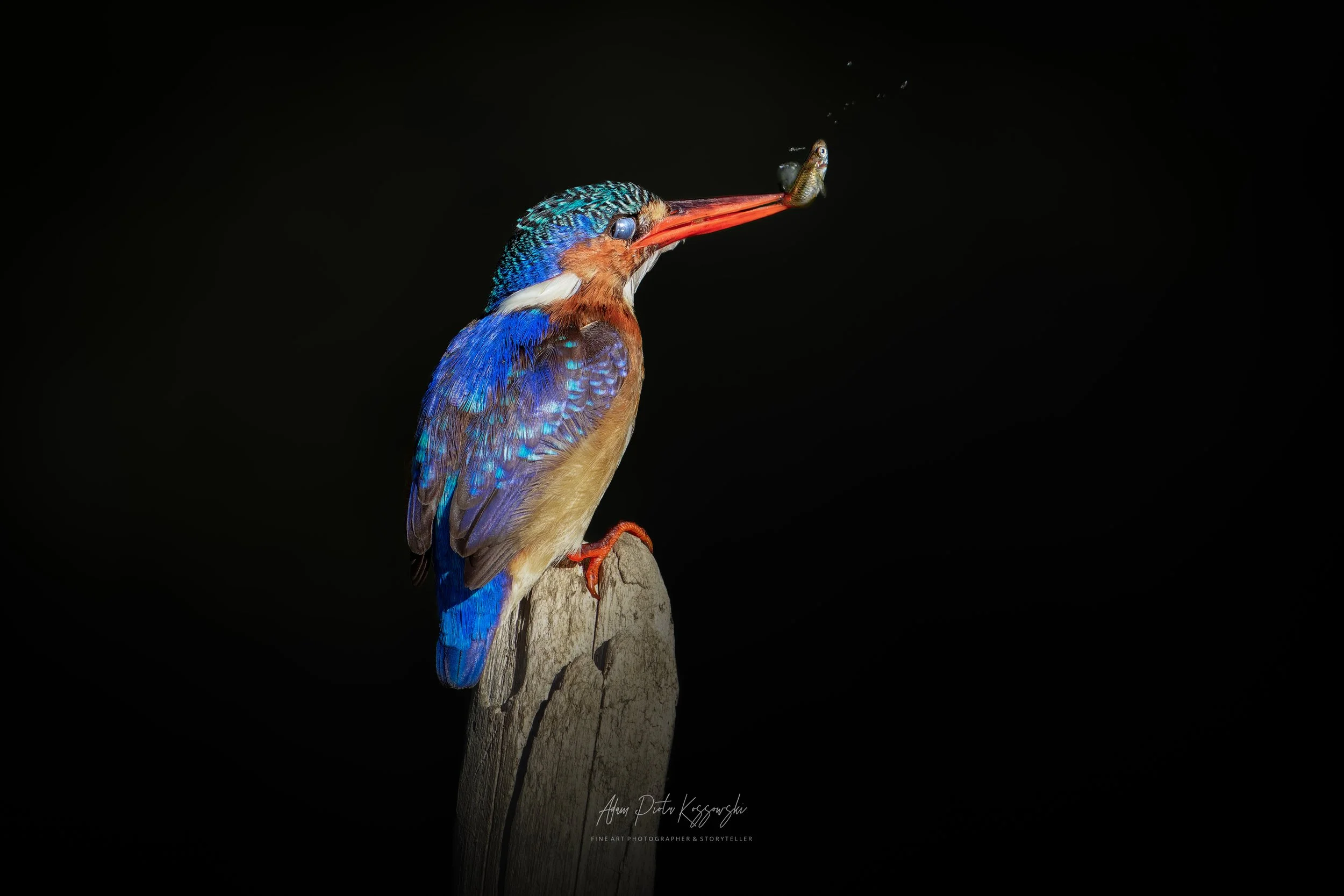
Malachite Kingfisher with fish, Liesbeeck River, Cape Town
The first light was only just reaching the Liesbeeck River.
The parkway was close behind me. Cars were already moving somewhere beyond the trees, the city starting its usual business. But down on the bank, tucked low near the river, that noise seemed to fade away. The river had become its own small world to me.
It was a cold Cape Town winter morning. The damp was sitting low over the water, the type that gets into your hands and face before you have properly noticed it. Not freezing. Just wet, sharp and quiet enough to remind you that you are crouched in the grass, waiting for a bird that might give you nothing at all.
The Kingfisher
Across the water, a Malachite Kingfisher was sitting in the willow branches. It’s one I have followed on and off for more than three years now. They are wild birds, so you never really know them in the way you might like to. But time does teach you a few things. You start to recognise a favourite branch or perch that gets used again. A stretch of river where the flash of blue is more likely to appear and, of course, its favourite fishing spots. They are one of my favourite feathered friends.
This bird was one of the parents. It had settled into that hunting stillness and silence kingfishers have. At first it looks calm, almost gentle and posed. But there is nothing casual about it. The head was angled down and the body hardly moved. It concentration was completely fixed on the dark water below.
A Malachite Kingfisher is tiny, around thirteen centimetres long, but it doesn’t feels tiny when the light catches it. The blue and turquoise can look almost metallic, while the orange underneath brings warmth into the body, even on a cold frosty morning. That shimmer is part of its magic for me. Much of it comes from the structure of the feathers and the way they catch and scatter light, so the bird can seem to shift colour slightly without really moving at all.
Morning Light
That morning, the light was still low and the far bank was in deep shadow. The liesbeeck river was dark and above it the kingfisher watched.
Then came the smallest movement. A little routine of a nod of the head. Almost nothing to someone who doesn’t know much about the birds but after watching kingfishers for a while, you learn to pay attention to that tiny movement. It often comes just before the dive. They have seen something and begin to calibrate their target. They do not waste much time and energy so they look, nod, measure, and then decide.
Then, taking all is in order, they dive. This one dropped from the willow like a piece of blue light.
The dive was almost too quick to follow. One moment the bird was above the river. The next it had struck the water and come back up with a fish held neatly in its bill. But instead of returning to the far bank, it landed on a broken stick closer to where I was waiting. It was a lucky moment for me to take this shot. So the bird, the fish, the old wooden perch and the dark background all came together for a few seconds. The fish was still wriggling as a few drops of water splashed briefly and fell beneath it. The kingfisher held the fish firmly, as it was a meal well earned and patiently planned. It was breakfast, caught quickly and cleanly.
Know Where to look
That is the part of bird photography I enjoy and often come back to. Colour matters, especially with a stunning bird like this. Detail matter too but behaviour is what gives the image its life for me. Malachite Kingfishers usually hunt from low perches close to water. They watch for small fish, tadpoles, aquatic insects and other small freshwater creatures, then dive sharply when they detect movement. Once they catch something, they often return to a familiar perch to swallow it. For such a small bird, the accuracy is remarkable supported by its pointed bill that is a working tool, made for striking, gripping and turning prey before it disappears.
In this image, the fish was still in that final moment before it was gone. That is why I called it The Last Splash. For anyone wanting to photograph one, a Malachite Kingfisher is easy to miss if you are moving too quickly. It is small, light and fast. But once you know where to look, you start searching for that flash of blue every time you come near the water.
Photography Notes
Camera: Sony A1
Lens: Sony FE 200–600mm G telephoto lens
Location: Liesbeeck River Parkway, Cape Town
Subject: Malachite Kingfisher