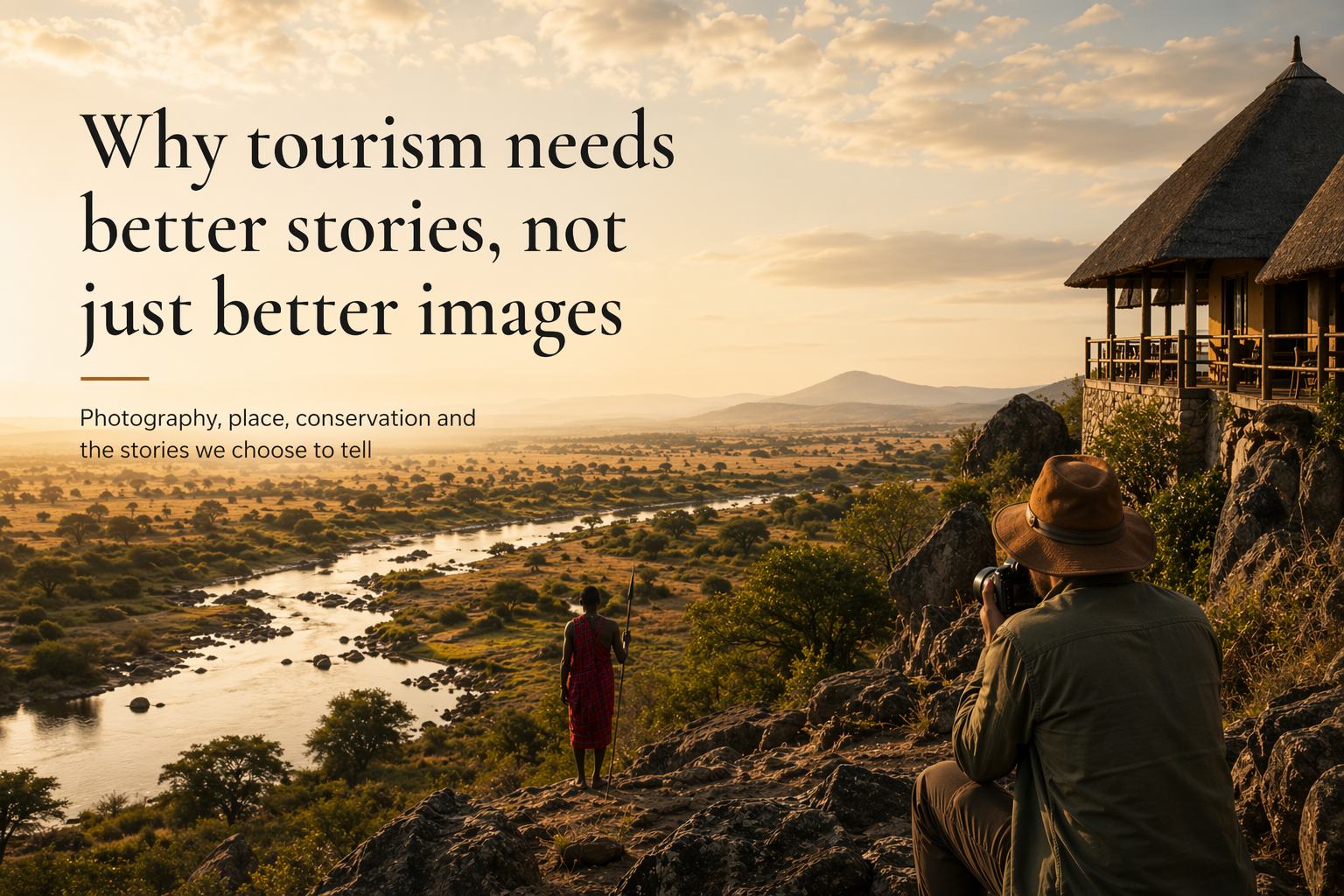
I have been observing the way places are represented, especially in tourism, hospitality and conservation, and it concerns me.
So much of destination marketing still depends on a familiar set of images. The sunset, the view from the deck, the glass of wine, the wild animal, the beautiful room, the pristine beach, the smiling guest. There is nothing wrong with any of these, and they work because they are attractive, recognisable and easy to understand. But I wonder whether they really tell us enough about the place itself.
A destination can be photographed beautifully yet still remain largely unexplained. A lodge can look exceptional online, but its real story may sit in the landscape around it, the people who work there, the history of the area, the conservation choices being made, the nearby communities, or the small details that rarely make it into a marketing campaign.
That is where I think tourism has a storytelling problem. The image may be what first draws attention, but it is the story that gives a place meaning for the viewer or traveller. Without that, many destinations risk being presented in the same visual language as everywhere else, even when what makes them valuable to a new generation of travellers is their real identity, their particular character, and the truth of where they are.
As a fine art photographer and storyteller, this is the space I am increasingly interested in. Not simply producing attractive content, but helping places communicate who they are with more honesty, depth and care.
I think this matters because tourism is not neutral, and neither is the way we market it. The way we photograph and describe a place shapes how people see it. It influences what they value, what they choose to ignore, what they expect and, in some cases, how they behave when they arrive.
This becomes even more important where tourism overlaps with genuine conservation, heritage and sustainability. There is now a growing language around authentic travel, responsible tourism and eco-conscious experiences, but in my view quite a bit of it is little more than a marketing layer placed over the same old visitor experience.
For me, better tourism storytelling is about helping people understand the value of a place more clearly. It means showing the beauty, but also giving that beauty context. It means asking what is real, what is fragile, what is being protected, who is involved, and what kind of relationship visitors are being invited into. I believe good stories create deeper interest, and that interest is what forms lasting memories and strengthens the provenance and character of a place.
So perhaps the harder question is this: are marketing teams, tourism authorities and place owners willing to look beyond the simple promise of more beds filled through one-dimensional messages of escape and enjoyment?
Are they willing to do the deeper work of revealing the woven truths of a place, its people, its landscape, its history, its tensions and its meaning, so that what is offered to travellers feels not only attractive, but genuinely authentic?